
Active Acids and Barrier Preservation: Skincare Analysis
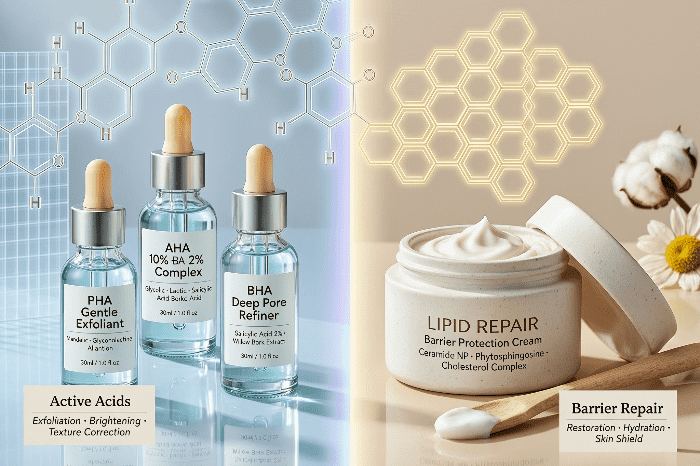
Skincare fans chase a radiant, glass-skin look, but slathering on harsh exfoliants without a plan destroys the skin. Chemical exfoliants—like alpha hydroxy acids (AHAs), beta hydroxy acids (BHAs), and polyhydroxy acids (PHAs)—smooth rough skin and clean out pores. However, pairing these strong active ingredients without knowing basic surface protection rules leads to burning, peeling, and severe redness.
Building a simple safety plan helps you combine strong exfoliants with rich moisturizer care. You get clear skin without damaging your face.
The Science of Your Skin Barrier
Your skin barrier, known as the stratum corneum, works like a brick wall. In a detailed report published in the Journal of Physical Chemistry B, researchers at the American Chemical Society explain how the "bricks" are dead skin cells called corneocytes. The "mortar" keeping them together consists of natural fats—mainly ceramides, cholesterol, and free fatty acids.
 |
What Your Outer Skin Does?
Locks In Water: It keeps deep skin layers hydrated so your face stays plump.
Blocks Dirt: It stops germs, pollution, and harsh weather from sinking into your skin.
Balances pH: It protects your natural acid mantle, keeping your skin slightly acidic to fight off harmful bacteria.
When you apply active acids, you change this protective shield. Controlled exfoliation breaks the tiny protein glues that hold dead cells together. But overdoing it strips away the vital lipid mortar alongside those dead cells.
Choosing the Right Acid for Your Skin Type
Different acids act on your skin in many ways. Picking the right one based on its size and how it dissolves prevents accidental skin damage.
Acid Category |
Main Examples |
How It Dissolves |
How Deep It Goes |
Best Skin Type |
AHAs (Alpha Hydroxy Acids) |
Glycolic, Lactic, Mandelic Acid |
Water-Soluble |
Skin Surface (Epidermis) |
Dry, Dull, or Sun-Damaged Skin |
BHAs (Beta Hydroxy Acids) |
Salicylic Acid |
Oil-Soluble |
Deep Inside Pores & Lipid Layer |
Oily, Clogged, or Acne-Prone Skin |
PHAs (Polyhydroxy Acids) |
Gluconolactone, Lactobionic Acid |
Water-Soluble (Large Molecules) |
Outer Surface Layer Only |
Sensitive, Dehydrated, or Reactive Skin |
Alpha Hydroxy Acids (AHAs)
As the Dermalogica clinical research team highlights in their educational guide on exfoliation, glycolic acid has the smallest molecule size among AHAs. Let this small-sized molecule soak deep into the skin quickly. While it works fast to smooth texture, that quick absorption often stings delicate skin. Lactic acid has a larger molecule, so it works slower and actually pulls water into the skin as it exfoliates. Mandelic acid has the largest molecule size of the group, making it the gentlest choice for sensitive or darker skin prone to dark spots. If you want to see how different acid formulations perform on the skin, check this review of the top 5 trending facial serums to find options that suit your texture goals.
Beta Hydroxy Acids (BHAs)
Salicylic acid dissolves in natural oils. The experts at Associated Skin Care Professionals note that this oil-soluble trait allows salicylic acid to dive straight inside oily pores. It clears out stuck dirt, oil, and dead skin. While salicylic acid calms red bumps, using too much without a solid cream dries out your skin barrier.
Polyhydroxy Acids (PHAs)
PHAs like gluconolactone are giant molecules. Because they are so big, they cannot sink deep into the skin. They gently sweep away dead cells on the top layer without irritating the sensitive layers below.
Safety Pairing Rules: How to Layer
Pairing active treatments takes smart timing. Follow these straightforward steps to guard your face:
1. Follow the pH Order
Apply your skin products from lowest pH to highest pH. Direct acids need a low pH (around 3.0 to 4.0) to work. If you slap a thick moisturizer on immediately, you stop the acid from doing its job. Give your acid product 5 minutes to settle before putting on your next step.
2. Stop Stacking Strong Ingredients
Do not use retinoids, strong AHAs, and high-dose vitamin C in the exact same routine. Stacking these three ingredients at once burns right through your skin barrier.
Quick Tip: Use vitamin C in the morning to protect against sunlight and pollution. Save your strong exfoliating acids or retinol for nighttime.
3. Buffer Your Acids
If your skin turns red easily, put a simple hydrating serum on first. Look for ingredients like panthenol or centella asiatica. Putting these ingredients down before your acid slows down absorption, giving you soft exfoliation without the burning feel. Balancing your active steps with hydrating layers helps you discover the best skin care products for youthful glow without pushing your skin past its limit.
How to Spot a Broken Barrier
Watch for these early signs so you can fix your routine fast:
Fake Glass Shine: Your skin looks tight, shiny, and plastic-like even when totally dry.
Gentle Cleansers Sting: Simple, fragrance-free washes or plain water suddenly burn your face.
Flaking and Red Patchy Skin: You see dry patches and red spots that get worse when you apply product.
Random Breakouts: Micro-cracks in a weak barrier let bacteria right in, causing sudden small pimples.
Emergency Barrier Repair Steps
If you over-exfoliated and your face hurts, pause all acids right away and follow this recovery plan.
Step-by-Step Fix
Cut the Routine Down: Wash with water or a mild, non-foaming cleanser. Put on a plain ceramide cream and a gentle mineral sunscreen.
Use the Ideal Fat Blend: In a landmark study published by the Journal of Investigative Dermatology, researchers at the University of California San Francisco proved that applying ceramides, cholesterol, and free fatty acids together in a specific ratio fixes damaged skin much faster than using oils alone.
Add Calming Ingredients: Use creams with squalane, niacinamide, or allantoin to stop itching and reduce redness.
Take a 3-Week Break: Skip all exfoliating acids for 21 to 28 days. Give your skin time to grow a completely fresh outer layer.
Frequently Asked Questions
Can I mix AHAs and BHAs together?
Yes, but do not layer two strong separate bottles. Buy one product that blends low doses of both acids together in a single formula.
How often should I use active acids?
Most people only need to exfoliate 2 to 3 times per week. If you have sensitive skin, stick to once a week or try a gentle PHA product. (Note: If you are expecting, consult our pregnancy-safe skin care routine guide to learn which exfoliating acids to swap out for safer alternatives.)
Should I put acids on wet or dry skin?
Always put exfoliating acids on 100% dry skin. Damp skin acts like a sponge, sucking the acid in too fast and causing chemical burns.
Final Takeaway
Exfoliating acids give you bright, smooth skin, but only if you protect your natural barrier first. Respecting the lipid shield on your face lets you enjoy the perks of clear skin without the pain of inflammation. Keep your face hydrated, space out your strong products, and pause the moment your skin starts to sting.
Do you think about pairing your direct acids with barrier support? Have you ever gone overboard with exfoliants and had to hit the pause button on your routine? Drop your thoughts, personal experiences, or favorite recovery products in the comments below—I'd love to chat and hear what works for you!
If you found this guide helpful and want to keep your skin glowing without the guesswork, drop your email to join our free newsletter. You'll get our latest skincare breakdowns, practical routine tips, and honest product reviews sent straight to your inbox. Plus, if you wish to explore more simple steps for hair, skin, and makeup, head over to our Health and Beauty Hub to check out our full collection of guides.
Certain links on this page may be affiliate links. This means OnTrendCollections may receive a small commission at no additional cost to you if you decide to make a purchase. This supports our work and enables us to continue offering free, useful content. All product imagery featured in our reviews is sourced directly from our retail partners' official websites for commentary purposes, while some graphics and design elements are created using Goart, Canva and Artspace. OnTrendCollections is not a part of, endorsed by, or in any other way connected to Facebook Inc. or Google Inc.

Author, Lifestyle Curator & Empowerment Specialist
Tired of dull skin, lifeless hair, and feeling less than your best? Discover the power of nature with our free e-book on natural solutions and supplement strategies for radiant skin, hair, and overall wellness. Learn how to achieve a healthy glow from the inside out. You can click the image to avail your FREE E-book.
